Light
Healthcare Staffing Insights

The Operational Impact of Last-Minute CRNA Call-Offs in Hospitals

Hospitals plan surgical schedules with precision — but a single last-minute CRNA call-off can disrupt the entire system. Here's what you need to know and how to stay prepared.

Explore Solutions Visit 1MAC Anesthesia →
Follow Us
1
Call-off disrupts the whole day's schedule
Rising burnout among anesthesia providers
$$$
Lost revenue from canceled procedures
24/7
Flexible locum coverage available
Results

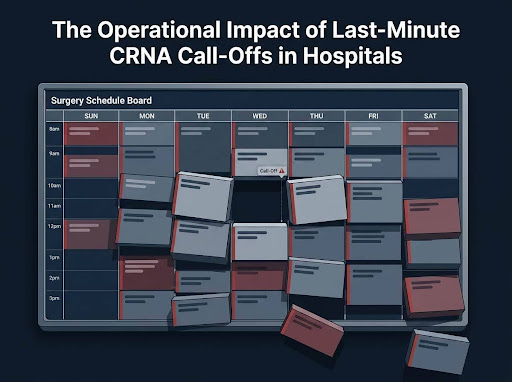
Hospitals plan surgical schedules with precision. Every case, every provider, and every time slot is carefully coordinated. But all it takes is one last-minute CRNA call-off to disrupt that entire system.

These situations are more common than many facilities expect. Illness, burnout, travel delays, or unexpected personal emergencies can leave a critical gap in anesthesia coverage with little warning. When that happens, the impact is immediate.

This is where platforms like 1MAC Anesthesia are helping hospitals stay prepared. Instead of scrambling to fill gaps, facilities can rely on flexible staffing systems that allow them to respond quickly and maintain continuity.

In high-demand environments, the ability to handle last-minute disruptions is just as important as long-term staffing.
CRNA Staffing Hospital Operations Anesthesia Coverage OR Scheduling

How CRNA Locums Staffing Helps Manage Sudden Gaps

Hospitals are increasingly relying on CRNA locums staffing to handle unexpected shortages and maintain consistent coverage.

CRNA locums staffing allows facilities to quickly bring in qualified providers when a gap appears. This flexibility is essential when dealing with last-minute call-offs.

When used effectively, CRNA locums staffing turns what would be a disruption into a manageable situation.

Maintain Scheduled Procedures

Avoid cancellations and keep the OR running on time.

Reduce Staff Pressure

Protect internal teams from overload during sudden gaps.

Avoid Costly Delays

Prevent scheduling ripple effects caused by absent providers.

Immediate Disruptions to Operating Room Schedules

A last-minute call-off affects more than just one shift. Operating rooms depend on precise coordination. When a CRNA is unavailable, procedures may be delayed, rescheduled, or canceled entirely.

Ripple Effects on the Daily Schedule

Even a single disruption can create a ripple effect that lasts for hours.

  • Delayed case starts that affect the entire day's schedule
  • Increased downtime between procedures
  • Reduced efficiency across surgical teams

Increased Pressure on Existing Staff

When a gap cannot be filled quickly, the responsibility shifts to the remaining team. CRNAs already on schedule may be asked to extend their shifts, take on additional cases, or adjust to new assignments. While this may provide short-term coverage, it increases long-term risk.

1

Higher Stress Levels

Providers face mounting pressure from extended shifts and unexpected assignments.

2

Increased Risk of Burnout

Repeated overloading accelerates emotional and physical exhaustion among CRNAs.

3

Reduced Job Satisfaction

Facilities that rely on internal teams to cover gaps often see higher turnover as a result.

Financial Impact of Last-Minute Call-Offs

The cost of a call-off goes beyond scheduling. These costs can add up quickly, especially in facilities that deal with frequent disruptions. Maintaining consistent coverage is one of the most effective ways to protect both operational flow and financial performance.

  • Lost revenue from delayed or canceled procedures
  • Increased overtime costs for staff covering gaps
  • Reduced utilization of operating room resources

Maintaining consistent coverage is one of the most effective ways to protect both operational flow and financial performance.

How 1MAC Anesthesia Helps Reduce Disruptions

Results

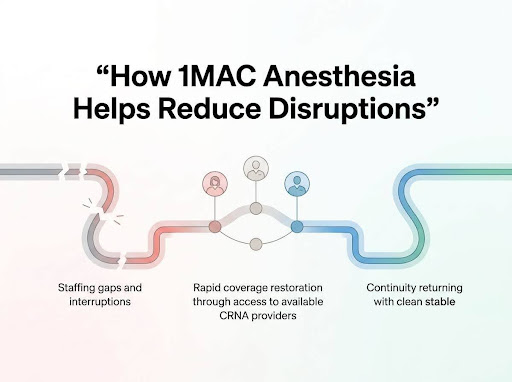
This is where 1MAC Anesthesia provides a reliable solution. Instead of relying on reactive processes, 1MAC allows hospitals to maintain access to a network of providers who can step in when needed.

Urgent Coverage Connections

Quickly connect with CRNAs for urgent coverage needs.

Locum Staffing Network

Use CRNA locums staffing to fill unexpected gaps with qualified providers.

Reduce Communication Barriers

Streamline coordination to eliminate delays caused by communication gaps.

Consistent Surgical Schedules

Maintain stable OR schedules even during unexpected disruptions.

This approach helps hospitals stay prepared rather than reactive — transforming emergency response into structured continuity.

Why Flexibility Is Critical for Handling Call-Offs

Last-minute call-offs are unpredictable. Facilities need systems that can respond just as quickly. Rigid staffing models struggle in these situations because they depend on fixed schedules and limited resources.

Flexible solutions like CRNA locums staffing allow hospitals to:

  • Respond immediately to sudden gaps
  • Maintain coverage without overloading internal teams
  • Adjust staffing levels based on real-time needs

This adaptability makes a significant difference in maintaining operational stability.

Preventing Long-Term Instability

Frequent disruptions create long-term challenges. When call-offs are not managed effectively, they lead to ongoing scheduling issues, increased workload for staff, and reduced efficiency.

Over time, this can affect retention, as providers may choose to leave environments where schedules are constantly changing.

Building a More Resilient Staffing Strategy

Handling last-minute call-offs requires more than quick fixes. It requires a system designed to manage uncertainty. Facilities that incorporate flexible staffing solutions are able to:

  • Maintain consistent coverage even during unexpected events
  • Reduce reliance on emergency adjustments
  • Improve overall team coordination

Platforms like 1MAC Anesthesia support this approach by providing access to providers when they are needed most.

Hospitals that use structured staffing systems are better equipped to handle these situations and maintain consistency.

Take Control Before the Next Disruption Happens

Last-minute CRNA call-offs are unavoidable. The real question is how prepared a facility is to handle them. Hospitals that rely on reactive strategies will continue to face disruptions. Those who build flexible staffing systems can maintain control even under pressure.

At 1MAC Anesthesia, facilities can use CRNA locums staffing to respond quickly, reduce downtime, and maintain stable operations.

In today's healthcare environment, resilience is built through preparation. And preparation starts with the right staffing strategy.

Connect with 1MAC Anesthesia

Frequently Asked Questions

What causes last-minute CRNA call-offs? +

Common reasons include illness, personal emergencies, burnout, and unexpected scheduling conflicts.

How do call-offs affect hospital operations? +

They lead to delayed procedures, increased workload for staff, and reduced operating room efficiency.

How can hospitals handle sudden staffing gaps? +

Using flexible solutions like CRNA locums staffing allows facilities to quickly fill gaps and maintain coverage.

Does CRNA locums staffing improve reliability? +

Yes, it provides access to qualified providers who can step in when needed, reducing disruptions.

How does 1MAC Anesthesia help during emergencies? +

1MAC Anesthesia connects hospitals with available CRNAs quickly, helping maintain continuity and reduce operational impact.